How to build a food logging habit that actually lasts
Most people quit tracking within 2 weeks. Behavioral science shows why, and how to design a system that sticks for months.
arrow_back All articles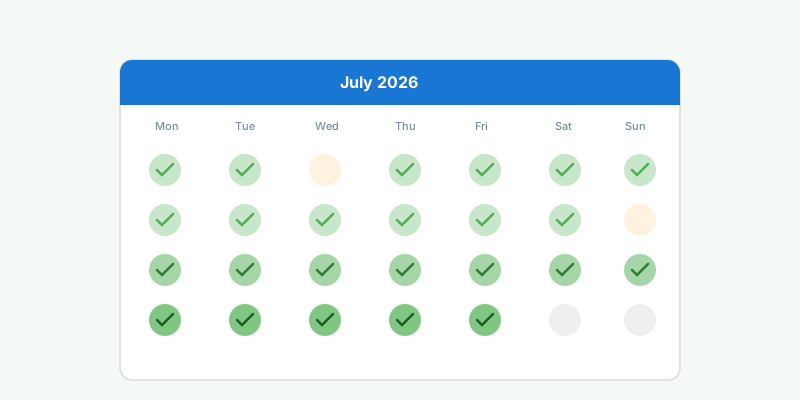
Industry data suggests that around 60% of food tracking app users drop off within the first two weeks. By month three, only 10–15% typically remain active. The problem isn't motivation, it's system design.
Why tracking fails
Behavioral research identifies three friction points:
- Effort per entry, manual search-and-log takes 3–5 minutes per meal. At 3 meals/day, that's 45–75 min/week of unpaid data entry.
- Delayed reward, benefits (weight change, energy patterns) take weeks to appear. The habit loop needs faster feedback.
- All-or-nothing framing, miss one meal, feel like you "broke the streak," abandon the whole system.
The science of habit formation
A 2009 study in the European Journal of Social Psychology found that habit formation takes a median of 66 days, not 21 as commonly claimed. More importantly, missing a single day did not significantly impact habit strength (Lally et al., 2010).
Key principles:
- Lower the activation energy, the easier the behavior, the more automatic it becomes.
- Attach to existing cues, "after I sit down to eat" is stronger than "at noon."
- Tolerate imperfection, consistency over time matters more than daily perfection.
Design your system
Make it easy (< 10 seconds)
With NutritionCam: open camera, photograph, done. No searching databases. No estimating grams. The AI handles the rest.
Make it visible
Turn on meal reminders at your usual eating times. A gentle nudge beats relying on memory.
Make it forgiving
Missed lunch? Just photograph dinner. The app doesn't penalize gaps, any data is better than no data.
Make it rewarding
Weekly summaries show your logging streak and nutrition patterns. Small wins compound.
The minimum viable habit
Start with one rule: photograph dinner every day for two weeks. That's it.
- Don't worry about other meals yet.
- Don't look at the data yet.
- Just build the reflex: sit down → photograph → eat.
After two weeks, expanding to lunch feels natural. After a month, breakfast joins. The key is that each expansion is optional and gradual.
When to add detail
- Week 1–2: Photos only. Build the reflex.
- Week 3–4: Glance at the ingredients breakdown. Notice patterns.
- Month 2+: Turn on macros if you're curious. Or don't.
- When you're ready: Full nutrition data, if that serves your goal.
The best tracking system is the one you're still using in six months. Start absurdly easy. Expand when it feels effortless.
References
- Lally P et al. "How are habits formed: Modelling habit formation in the real world." European Journal of Social Psychology 2010;40(6):998–1009. doi:10.1002/ejsp.674